









Commercial beekeeping and honey processing
Commercial beekeeping and honey processing
Type 3: Borderland with fragile context and underdeveloped regional integration infrastructure.
Business Model Description
Develop and operate modern beekeeping hubs with high-yield hives, integrated honey processing, and branded packaging to produce premium-quality honey for domestic and export markets. Train local beekeepers in sustainable practices and provide access to affordable, high-quality equipment. Target local, regional, and specialty export markets with a focus on organic and fair-trade certifications. Secure financing through a combination of grants, micro-loans for beekeepers, and equity investment for the centralized processing facility.
How is this information gathered?
Cross-border investment opportunities with potential to contribute to sustainable development are based on Borderlands SDG Investor Maps.
Disclaimer
UNDP, the Private Finance for the SDGs, and their affiliates (collectively “UNDP”) do not seek or solicit investment for programmes, projects, or opportunities described on this site (collectively “Programmes”) or any other Programmes, and nothing on this page should constitute a solicitation for investment. The actors listed on this site are not partners of UNDP, and their inclusion should not be construed as an endorsement or recommendation by UNDP for any relationship or investment.
The descriptions on this page are provided for informational purposes only. Only companies and enterprises that appear under the case study tab have been validated and vetted through UNDP programmes such as the Growth Stage Impact Ventures (GSIV), Business Call to Action (BCtA), or through other UN agencies. Even then, under no circumstances should their appearance on this website be construed as an endorsement for any relationship or investment. UNDP assumes no liability for investment losses directly or indirectly resulting from recommendations made, implied, or inferred by its research. Likewise, UNDP assumes no claim to investment gains directly or indirectly resulting from trading profits, investment management, or advisory fees obtained by following investment recommendations made, implied, or inferred by its research.
Investment involves risk, and all investments should be made with the supervision of a professional investment manager or advisor. The materials on the website are not an offer to sell or a solicitation of an offer to buy any investment, security, or commodity, nor shall any security be offered or sold to any person, in any jurisdiction in which such offer would be unlawful under the securities laws of such jurisdiction.
Region
Sector Classification
Food and Beverage
Food and Agriculture
Borderland development need
Crop production, including staple and high-value horticultural crops, is a crucial component of the borderland economy with 45,000 tons produced in West Pokot only in 2023. Yet 45% of households in the borderland face high levels of acute food insecurity. Poor irrigation, climate vulnerability, weak input supply chains, and limited agro-processing capacity lead to low yields and 30-40% post-harvest losses. (19, 20, 21, 53)
Processed Foods
Pipeline Opportunity
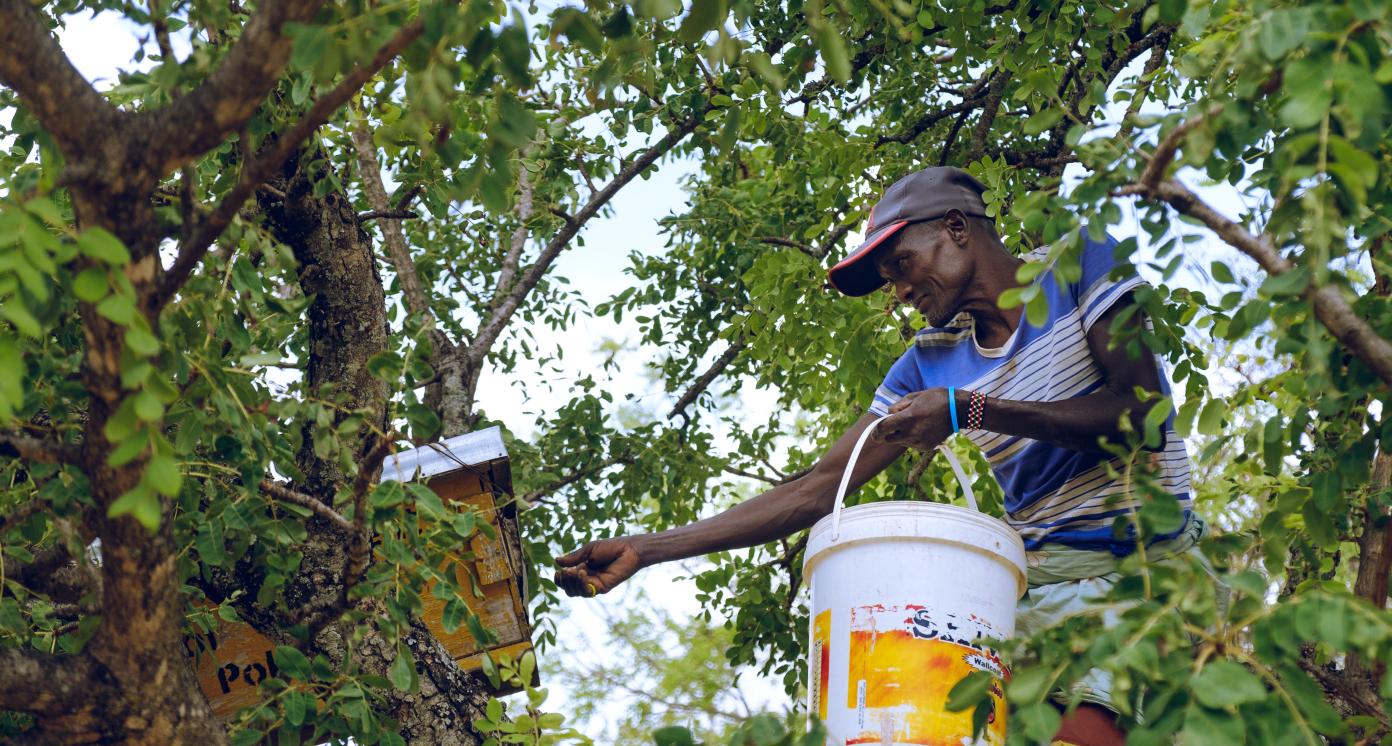
Commercial beekeeping and honey processing
Develop and operate modern beekeeping hubs with high-yield hives, integrated honey processing, and branded packaging to produce premium-quality honey for domestic and export markets. Train local beekeepers in sustainable practices and provide access to affordable, high-quality equipment. Target local, regional, and specialty export markets with a focus on organic and fair-trade certifications. Secure financing through a combination of grants, micro-loans for beekeepers, and equity investment for the centralized processing facility.
Business Case
Market Size and Environment
< USD 50 million
With an estimated 550MT of honey produced annually in West Pokot and Karamoja and a premium processed price of $10/kg, the market is valued at $5.5M. Strong local and export demand, diverse floral sources, and existing producer groups like Cabesi and Kara-Tunga support this volume, with further growth possible through aggregation and processing. (28)
Indicative Return
> 25%
Beekeeping has low input costs and high value-add potential. Processed honey can sell for double the raw price, generating strong margins. Even after factoring in security and logistics risks, ROI remains attractive at 25–30%. Baseline profitability can reach 55% with organized aggregation, processing, and access to premium markets. (28)
Investment Timeframe
Short Term (0–5 years)
Returns are expected in 3-5 years, with revenue from year 1 and profitability by year 3 as processing scales. Cases in IOA space reached 10T+ production in this timeframe. Strong market demand and existing cooperatives reduce time to scale, accelerating growth. (25, 28)
Ticket Size
USD 500,000 - USD 1 million
Market Risks and Scale Obstacles
Business - Supply Chain Constraints
Expected Financing Model
Blended financing (risk sharing and public support)
IOA Business Criteria
Strong domestic and export demand for processed honey and by-products. Blended financing supports infrastructure and branding, ensuring competitiveness in premium markets. (29, 31, 33)
Focuses on modern beekeeping hubs, integrating high-yield hives, processing, and branded packaging to enhance value addition and market access. (29, 31)
Engages 3,000+ farmers across West Pokot and Karamoja, with potential to scale production to 550MT+ annually and expand into regional and export markets. (28)
Cabesi and Kara-Tunga Honey have demonstrated successful aggregation, processing, and branding, proving the viability of structured honey value chains in the region. (25, 26)
Impact Case
Sustainable Development Need
Beekeeping supports 3,000+ farmers, with 70% of traders being women, enhancing income diversification and resilience in fragile areas. Currently, most farmers rely on low-margin raw honey sales due to limited processing and market access. (25, 27, 32)
Beekeeping promotes forest conservation by reducing reliance on deforestation-based livelihoods. However, traditional hives require tree cutting, and climate change, pesticides, and bush burning threaten bee populations. (29, 30)
Honey is a nutrient-rich staple in rural areas, reducing malnutrition risks. Yet, poor storage, aggregation, and branding limit profitability, forcing small producers to sell at low prices to intermediaries. (27, 29)
Gender & Marginalisation
70% of honey traders are women, yet they lack access to finance, modern equipment, and market linkages, limiting their earnings. Most women sell raw honey at low prices due to limited processing and branding opportunities. (29, 31, 32)
Beekeeping is key for pastoralist and agro-pastoralist communities in Karamoja and West Pokot, regions with limited economic opportunities. However, weak infrastructure isolates producers from high-value markets. (24, 29)
Most beekeepers are smallholders, facing barriers to cooperative membership, credit, and training. Youth engagement is low due to high startup costs for modern hives and a lack of technical support programs. (24, 29)
Expected Development Outcome
Increased honey production boosts income for 3,000+ farmers, particularly women, by shifting from low-margin raw honey sales to higher-value processed honey. Investments in training, storage, and branding increase market access and financial inclusion for marginalized producers. (29, 31, 33)
Promoting modern hives and sustainable beekeeping reduces deforestation and reliance on tree-cutting for traditional hives. Training on climate-smart practices and reducing pesticide use strengthens hive resilience against climate shocks, pests, and biodiversity loss. (29, 31, 33)
Strengthening honey value chains enhances nutrition by making honey more accessible and increasing producer incomes. Improved storage, processing, and cooperative marketing ensures higher, stable prices for farmers, reducing exploitative sales to intermediaries and enhancing local food security. (29, 31, 33)
Expanding formal market access reduces reliance on informal, exploitative trade, addressing economic drivers of conflict. Strengthening cooperatives and cross-border trade agreements fosters economic ties between communities, reducing tensions over resources and enhancing regional stability. (31)
Gender & Marginalisation
Developing the honey value chain strengthens women’s participation by providing access to credit, modern hives, and processing equipment, enabling them to scale production and earn higher margins. Training in branding and cooperative marketing enhances market access, boosting financial independence and income stability. (18, 29)
By investing in processing hubs, transport, and cooperative networks, remote beekeepers are integrated into formal markets. Strengthening cross-border trade helps pastoralist communities access high-value buyers, reducing economic isolation and enhancing regional trade links.
Supporting honey production and processing lowers entry barriers by subsidizing modern hives, offering credit, and providing technical training. Strengthening cooperatives ensures smallholders gain price negotiation power, while targeted programs encourage youth engagement, creating sustainable employment opportunities.
Primary SDGs addressed
1.1.1 Proportion of the population living below the international poverty line by sex, age, employment status and geographic location (urban/rural)
In 2020, the poverty rate was 66% in Karamoja and 57% in West Pokot. (1, 2)
The government of Uganda aims to reduce the incidence of poverty in Karamoja to 42.2% over the next five-year period. (1)
8.3.1 Proportion of informal employment in total employment, by sector and sex
In 2023, Kenya's informal sector employed approximately 16.7 million individuals, accounting for about 83.5% of the total employment. The informal sector in Uganda employs about 13.3 million people out of the 15.8 million working population, representing approximately 85% of total employment. (34, 35)
N/A
12.2.1 Material footprint, material footprint per capita, and material footprint per GDP
N/A
N/A
Secondary SDGs addressed
Directly impacted stakeholders
People
Gender inequality and/or marginalization
Planet
Corporates
Public sector
Indirectly impacted stakeholders
People
Gender inequality and/or marginalization
Planet
Corporates
Public sector
Outcome Risks
Expanding beekeeping may increase deforestation if traditional hives rely on tree-cutting, harming biodiversity and reducing long-term honey production.
Unequal access to modern hives and credit may exclude women from high-value processing, widening gender disparities in earnings and decision-making.
If market access or cooperatives favor certain groups, it may fuel tensions over economic control, worsening inter-community conflicts in fragile borderlands.
Large-scale processing may outcompete traditional beekeepers, reducing incomes for small producers who lack the means to transition to modernized honey production.
Impact Risks
If farmers resist modern hives due to cost or tradition, productivity gains may be minimal, limiting income growth and scalability of the honey value chain.
If women lack financing, training, or cooperative leadership roles, they may be excluded from higher-value processing, reinforcing existing gender inequalities.
Droughts, deforestation, and pesticide use may reduce nectar availability, leading to lower honey yields, harming both beekeeping livelihoods and biodiversity conservation.
IMP Impact Classification
What
Increased income, food security, and climate resilience through modern beekeeping, processing, and market access, benefiting farmers while promoting biodiversity conservation.
Who
Smallholder beekeepers, women traders, and pastoralist communities in West Pokot and Karamoja, with expanded regional trade benefiting Uganda and Kenya’s honey markets.
Risk
Market volatility, climate shocks, gender exclusion, and resource conflicts may limit scale, profitability, and sustainability, reducing expected economic and environmental impact.
Enabling Environment
General Policy Environment
Karamoja Integrated Development Plan 3 (KIDP3): KIDP3 prioritizes agro-industrialization and value addition, including honey production and processing. It promotes market linkages, cooperative strengthening, and climate-smart practices to increase income and resilience for beekeepers. (1)
West Pokot County Integrated Development Plan (CIDP): The CIDP supports modern beekeeping, cooperative development, and processing infrastructure to enhance honey value chains. It emphasizes market access, branding, and SME financing to boost local economic growth. (2)
Kenya Livestock Policy (Sessional Paper No. 3 of 2020): Recognizes beekeeping as a key sector for rural livelihoods and food security. It promotes modern hive adoption, disease control, and quality standards to support value addition and market competitiveness. (36)
Uganda National Agriculture Policy (NAP) 2013: Supports honey production as a viable agribusiness through sustainable land management, improved access to finance, and cooperative strengthening to increase market participation and rural incomes. (15)
Kenya Agricultural Sector Transformation and Growth Strategy (ASTGS) 2019-2029: Encourages honey value chain development by investing in processing, branding, and export market access. Supports SMEs, technology adoption, and agribusiness financing to boost productivity and rural employment. (14)
General Cross-border Trade Policy and Regulatory environment
East African Community (EAC) Honey Standards (2020): Provides harmonized honey quality and safety standards for trade within EAC member states, facilitating cross-border honey exports between Kenya, Uganda, and regional markets. (41)
IGAD Regional Strategy (2021–2025): Promotes regional value chains and market access for climate-resilient sectors, including apiculture, supporting cross-border coordination and trade facilitation. (42)
African Continental Free Trade Area (AfCFTA, 2021): Aims to remove tariffs and non-tariff barriers on goods across African countries, creating broader export opportunities for East African producers. (43)
Capital structure and funding
Sources of Capital: Existing honey enterprises rely on national and international funding, including microfinance, cooperative savings, and NGO grants. Identified opportunities require blended financing, combining private investment, concessional loans, and donor support for processing, storage, and market expansion. (44)
Average Capital Size: Existing investments in beekeeping are small, with microfinance loans around $10,000-$50,000. Identified opportunities, such as automated honey processing plants, require $500,000-$2M to scale production, improve branding, and increase export capacity. (25, 26, 44)
Trends of Capital Flows: Capital inflows into West Pokot and Karamoja remain low, with NGO-driven financing dominating agribusiness support. Private sector investment is limited, but growing interest in agro-processing and export markets offers new opportunities for honey sector expansion. (25, 26, 44)
Impact of Conflict on Capital Flows: Frequent insecurity, cattle raids, and weak border controls deter investors, leading to high-risk premiums and limited credit access. Government stabilization efforts, such as policing and peace dialogues, have improved conditions, but businesses still face security-driven cost inflation. (4)
Development Partner Support: NGOs and international donors fund rural livelihoods and food security projects, with some focus on beekeeping. For example KVDA allocated KES 60 million (USD 550,000) to purchase and process 100 tons of honey from beekeeping cooperatives in West Pokot and Baringo counties. (45)
Financial incentives
While direct fiscal incentives are limited, emerging investment projects and international grants are beginning to provide financial support to the beekeeping sector in these regions.
In Uganda, all equipment and gear used in beekeeping, as authorized by the Director of Veterinary Services, are exempt from import duty. (45)
In Uganda, the importation of plant and machinery, including beekeeping equipment, benefits from a VAT deferral facility, which can subsequently be waived upon approval by the relevant authorities. (47)
In Kenya, while there are no specific fiscal incentives exclusively for beekeeping,the government has promoted modern beekeeping to provide additional income for rural households, recognizing its potential to contribute to poverty eradication and food security.
In Kenya, initiatives like the Kenya Beehive Project offer investors an 8% return while supporting local beekeepers, providing both financial incentives and resources for apiary management. (48)
Security Environment
Frequent cattle rustling in Karamoja and West Pokot disrupts economic activity, creates insecurity for supply chains, and increases livestock theft risk for beekeepers. Violence in Karita, Kobebe, and Kibish remains a major concern. (4, 49, 50)
Ongoing disputes, such as Uganda’s 2023 expulsion of Turkana herders, disrupt trade and movement. Regulatory unpredictability affects honey supply chains, impacting exports to Kenya and Uganda. (4, 49, 50)
Road banditry and armed robbery pose threats to honey transport and trade. Beekeepers and traders face higher insurance costs, disrupted deliveries, and loss of stock along key trade routes. (4, 49, 50)
Limited government presence, potential bribery at checkpoints, and inconsistent regulations increase costs and delays for honey businesses. Informal trade dominates, reducing profitability and formalization. (6, 31)
Droughts and water scarcity fuel pastoralist conflicts, displacing communities and disrupting honey production. Environmental degradation affects bee forage availability, lowering yields. (4, 49, 50)
Risk mitigation strategies
Establish bulk storage and processing hubs in secure zones, allowing beekeepers to aggregate, process, and store honey safely, mitigating price volatility.
Partner with traditional elders, women’s groups, and local councils to align honey production with existing land-use practices, securing long-term production sites.
Collaborate with local security forces, peace committees, and community-based protection units to safeguard honey hubs and trade routes against theft and extortion.
Design women-led cooperatives with access to finance, training, and equipment, ensuring their participation in honey processing and marketing.
Support cross-border beekeeping cooperatives to foster economic interdependence between Pokot, Karamojong, and Turkana communities, reducing tensions.
Actors in IOA Space
References
Sector and Subsector Sources
- (1) Ministry for Karamoja Affairs & Office of the Prime Minister. (2021). The Third Karamoja Integrated Development Plan (KIDP 3) 2021–2025.
- (2) County Government of West Pokot. (2023). Third County Integrated Development Plan (CIDP) 2023–2027.
- (3) Catley, A., et al. (2021). Introducing pathways to resilience in the Karamoja Cluster. Pastoralism, 11(28). https://doi.org/10.1186/s13570-021-00214-4
- (4) UNDP Africa Borderlands Centre. (2022). The Karamoja Cluster: Rapid Conflict Analysis and Gender Assessment (Kenya and Uganda).
- (5) Kenya High Commission Kampala. (2025). Kenya-Uganda Trade & Investments. Accessed February 2025. https://www.kenyamissionkampala.ug/kenya-uganda-trade-investments
- (6) Columbia SIPA. (2020). Ethical Cross-Border Trading between Kenya and Uganda by Women-led Micro and Small Enterprises.
- (7) Aklilu, Y. (2017). Livestock Trade in Karamoja, Uganda: An Update of Market Dynamics and Trends. USAID. https://karamojaresilience.org/wp-content/uploads/2021/05/tufts_1803_krsu_livestock_trade_karamoja_v2_online.pdf
- (8) Arasio, R.L., and E. Stites. 2022. “The Return of Conflict in Karamoja, Uganda: Community Perspectives.” Karamoja Resilience Support Unit (KRSU), Feinstein International Center, Friedman School of Nutrition Science and Policy at Tufts University, Kamp
- (9) Interpeace, IGAD, & FAO. (2023). Conflict, Climate Change, Food Security and Mobility in the Karamoja Cluster. https://www.interpeace.org/wp-content/uploads/2024/01/Conflict-climate-change-food-security-and-mobility-in-the-Karamoja-Cluster.pdf
- (10) Armed Conflict Location & Event Data Project (ACLED). (2025). Regional Overview – Africa, February 2025. https://acleddata.com/2025/02/10/africa-overview-february-2025
- (11) Republic of Uganda. (2009). The National Livestock Census Report 2008. Ministry of Agriculture, Animal Industry & Fisheries.
- (12) Behnke, R.H. and Arasio, R.L., 2019. The Productivity and Economic Value of Livestock in Karamoja Sub-region, Uganda. Karamoja Resilience Support Unit, USAID/Uganda, UK aid, and Irish Aid, Kampala.
- (13) Auma, S., & Badr, N. (2022). Assessment of the Impacts of Climate Change on Livestock Water Sources and Livestock Production: Case Study, Karamoja Region of Uganda. World Water Policy.
- (14) Republic of Kenya. (n.d.). Agricultural Sector Transformation and Growth Strategy (2019-2029). https://asdsp.kilimo.go.ke/wp-content/uploads/2023/10/ASTGS-Full-Version-1.pdf
- (15) Republic of Uganda. (2013). National Agriculture Policy. https://www.agriculture.go.ug/wp-content/uploads/2019/04/National-Agriculture-Policy.pdf
- (16) Coffey International. (2016). Support for Strategic Review and Planning to Strengthen DFID’s Work on Gender Equality and Women and Girls Empowerment in Karamoja Region, Uganda.
- (17) Czuba, K. (2012). Income Generating Activities and Savings Behaviour of Adolescent Girls and Young Women in Karamoja.
- (18) IMARA Program. (2022). Value Chain Mapping and Analysis: Integrated Management of Natural Resources for Resilience in the ASAL.
- (19) Karamoja Resilience Support Unit (2022). Karamoja Donor Mapping Report—2022. Karamoja Resilience Support Unit II, United States Agency for International Development (USAID)/Uganda, Kampala.
- (20) FAO. (2011). Global Food Losses and Food Waste.
- (21) Integrated Food Security Phase Classification (IPC). (2023). Karamoja Region IPC Analysis.
- (22) Barrantes, A., & Caravani, M. (2020). Situational Analysis of Food Security and Income in Karamoja.
IOA Sources
- (23) Interview with public district officers in Moroto and West Pokot
- (24) Interview with veterinary district commissionner in Moroto
- (25) Interview with Cabesi Honey
- (26) Interview with Kara-Tunga Honey
- (27) Interview with Moroto district entomologist
- (28) Estimations based on interview data with honey producers, cooperatives, and district/county officers
- (29) World Vision Kenya. (2025, February). Transforming Communities Through Beekeeping and Sustainable Farming. https://www.wvi.org/stories/kenya/transforming-communities-through-beekeeping-and-sustainable-farming
- (30) Muli, A., Munguti, S. K., & Raina. (2007). Quality of Honey Harvested and Processed Using Traditional Methods in Rural Areas of Kenya. International Centre of Insect Physiology and Ecology (ICIPE).
- (31) Interview with an agribusiness consultant for a large international organisation
- (32) Interview with honey cooperatives in West Pokot
- (33) Intergovernmental Authority on Development (IGAD). (2017). Stocktaking Study of Complementary Livelihoods Market and Value Chain Analysis for Identified Priority Products in IGAD Region Cross Border Areas. Regional Pastoral Livelihoods Resilience Project (RPLRP).
- (34) Statista. (2023). Informal Sector Employment in Kenya by Activity. https://www.statista.com/statistics/1134287/informal-sector-employment-in-kenya-by-activity
- (35) National Planning Authority (NPA). (2023). Employment and Skills Status Report 2022. Kampala: NPA. https://www.npa.go.ug/wp-content/uploads/2023/08/FINAL-ESSR-REPORT-2022.pdf
- (36) Republic of Kenya. (2020). Sessional Paper No. 3 of 2020 on the Livestock Policy.
- (37) Republic of Kenya. (2017). Kenya Apiculture Policy. Ministry of Agriculture, Livestock and Fisheries.
- (38) Republic of Uganda. (2004). The Animal Diseases (Control of Bee Diseases) Rules. Ministry of Agriculture, Animal Industry and Fisheries.
- (39) Kenya Bureau of Standards (KEBS). Kenya Standard KS 2326:2011 – Honey – Specification. Nairobi: Kenya Bureau of Standards.
- (40) Uganda National Bureau of Standards (UNBS). Uganda Honey Trade Regulations. Kampala: UNBS.
- (41) East African Community (EAC). (2020). EAC Harmonized Standards for Honey. Arusha: EAC Secretariat.
- (42) Intergovernmental Authority on Development (IGAD). (2021). IGAD Regional Strategy: 2021–2025. Djibouti: IGAD Secretariat.
- (43) African Union (AU). (2021). African Continental Free Trade Area (AfCFTA) Agreement. Addis Ababa: African Union Commission.
- (44) Interviews with financial institutions in Karamoja and West Pokot
- (45) Kenya News Agency. (2024). KVDA Sets Aside Sh60 Million to Buy Honey. https://www.kenyanews.go.ke/kvda-sets-aside-sh60-million-to-buy-honey
- (46) East African Community. (2017). East African Community Customs Management Act (Revised 30th June 2017). https://ugandatrades.go.ug/media/East-African-Community-Customs-Management-Act-revised-30th-June-2017.pdf
- (47) PricewaterhouseCoopers (PwC). (n.d.). Uganda VAT Deferral Scheme Overview. https://www.pwc.com/ug/en/assets/pdf/uganda-tax-vat-flier.pdf
- (48) DGB Group. (n.d.). Kenya Beehive Project. https://www.green.earth/projects/kenya-beehive-project-kenya
- (49) Gray, S., Sundal, M., Wiebusch, B., Little, M. A., Leslie, P. W., & Pike, I. L. (2003). Cattle Raiding, Cultural Survival, and Adaptability of East African Pastoralists. Current Anthropology, 44(S5), S3–S30. https://www.journals.uchicago.edu/doi/full/10.1086/377669
- (50) Stites, E. (2022). Conflict in Karamoja: A Synthesis of Historical and Current Perspectives, 1920–2022. Karamoja Resilience Support Unit (KRSU), Feinstein International Center, Tufts University.
- (51) USAID. (2023). Applied Political Economy Analysis for the Karamoja Cluster.
- (52) Intergovernmental Authority on Development (IGAD). (2019). Mapping of Actors in the Karamoja Cluster.
- (53) West Pokot Crops Statistics, 2019-2023, shared by the Chamber of Commerce in West Pokot.
- (54) Deutsche Welle (2013). Women take over Kenya's farming sector. https://www.dw.com/en/women-take-over-kenyas-farming-sector/a-16716322